
Most advice about managing up is too polite to be useful. Align with your boss, communicate clearly, build trust. All true, all generic, and none of it tells you what to actually do when your VP wants a delivery date your team can’t hit.
Managing up has a reputation problem. It sounds like flattery, like office politics performed by people who care more about visibility than results. The bad version absolutely exists. But the useful version is one of the core operating skills of a good manager. If you can’t translate your team’s reality into language leadership acts on, push back without creating drama, and frame decisions so your boss can make them quickly, your team eventually pays for it.
AI helps here, though not the way most people assume. ChatGPT, Claude, and Copilot aren’t useful as ghostwriters for your upward communication. They’re useful as a private sparring partner before the message goes out. They pressure-test your tone, expose weak logic, and turn a frustrated team complaint into something a senior leader can read and act on. That rehearsal space is the real advantage, and almost nobody talks about using AI this way.
This article covers what managing up actually means, how to read your boss before you send anything, and where AI genuinely helps versus where your judgment is the only thing that matters. The goal isn’t to make you better at managing up in the abstract. It’s to make your next hard conversation with leadership land better than the last one.
Key Takeaways
- Managing up isn’t flattery or politics, it’s closing the information gap between your team’s work and the leaders deciding about it
- The best use of AI here is as a private sparring partner that pressure-tests your draft, not a ghostwriter that writes the message for you
- Read how your boss processes information (brief vs detailed, data vs story, async vs live, low vs high context) before you send anything that matters
- Credibility is earned through consistent, low-drama follow-through, and only then can you spend it on the hard asks
- AI can’t read timing, hierarchy tension, or accumulated trust, so reserve it for the messages that matter and keep your judgment in the live conversation
Table of Contents
What Managing Up Actually Means (And What It Doesn’t)
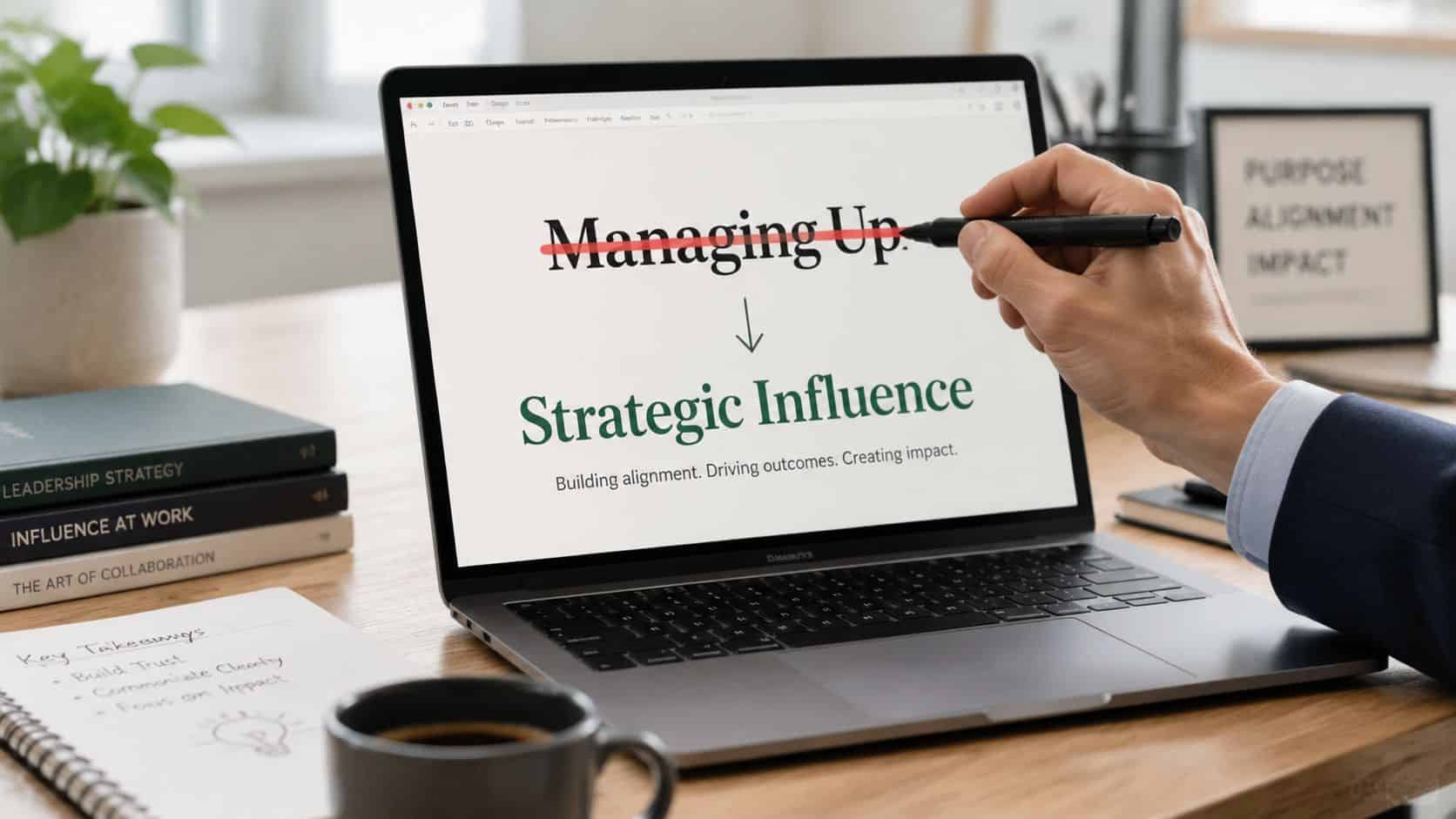
Managing up isn’t reversing the hierarchy or charming your boss into giving you what you want. It’s closing the information gap between the work and the people making decisions about the work. The University of Minnesota’s HR definition puts it plainly: consciously working with your supervisor to get the best possible results for you, your manager, and the organization. The point is mutual effectiveness, not managing your boss’s perception of you.
That distinction matters because the bad version of managing up is everywhere, and it’s worth naming so you can avoid it.
The Bad Version
Bad managing up is performative. It looks like agreeing in the room to protect the relationship while the real execution risk goes unspoken. It looks like selective storytelling designed to impress leadership rather than inform them. It looks like wrapping every issue in urgency so you seem on top of things, or worse, protecting your standing with your boss by throwing your team under the bus when something goes wrong. None of it scales. It buys short-term approval and long-term distrust.
The Good Version
The good version is less glamorous. It usually looks like short, boring competence. You’re managing up well when your boss gets fewer surprises, better choices, and sharper context than they would otherwise.
In practice that means knowing when to say “this can ship on time, but only if we cut scope.” It means translating “the team is frustrated” into “decision churn is creating rework, and we’re at the point where delivery risk becomes real.” It means protecting your team’s attention while still giving leadership the information they need to do their job.
This is where AI earns its place, because most upward communication fails before it’s ever spoken. The message is too long, too emotional, too technical, too deferential, or too vague. A private rehearsal space where you can test three versions of the same argument and send the one that actually helps is genuinely valuable, and that’s exactly what these tools are good at.
Read Your Boss Before You Send Anything
A lot of upward communication fails before the content even matters, because it’s structurally wrong for the person receiving it. You send three paragraphs of detail to someone who wanted the recommendation in two lines. You send a quick punchline to someone who needed the context to trust the call. The message can be completely correct and still fail because it didn’t match how your boss processes information.
Four dimensions are worth reading before you send anything that matters.
Brief versus detailed. Some leaders want the recommendation first and the details only if they ask. Others want enough detail upfront to challenge your assumptions before they’ll sign off. Sending the wrong density to either one makes you harder to work with.
Data-driven versus story-driven. Some bosses respond to tradeoffs, constraints, and numbers. Others move when an issue connects to customer impact, team friction, or reputation. Same situation, two completely different framings, and you need to know which one lands.
Async versus live. Some leaders think best in a written doc or Slack thread and will give you a real answer there. Others will ignore your carefully written case and only actually decide in a meeting. If you keep sending documents to someone who decides live, you’ll keep feeling unheard.
Low-context versus high-context. Some need the history and the stakeholder dynamics to make a call. Others just want the current decision and the cost of waiting. Giving a high-context boss no background reads as thin. Giving a low-context boss the full saga reads as noise.
Reading these dimensions isn’t being political or inauthentic. Ignoring them is just making your boss work harder than they need to, which is the opposite of managing up.
This is also a place AI helps quietly. If you’ve got a stack of past feedback, meeting notes, or email threads from your boss, you can drop them into ChatGPT or Claude and ask what patterns show up in how this person evaluates requests. What do they consistently ask for? Where do they lose patience? What kind of framing gets a faster yes? The answers turn managing up from guesswork into something closer to a system.
Build Credibility Before You Spend It
Pushback only works when your boss already trusts your judgment. You can have the sharpest argument in the world for why a deadline is unrealistic, but if you haven’t built up credibility first, it lands as complaining. The manager who gets heard on the hard calls is almost always the one who earned that standing on a hundred small ones.

Credibility upward comes from boring consistency, not charisma. A few things build it, repeated over time. Flagging risk early instead of revealing it at the deadline. Showing the tradeoffs instead of dumping problems on your boss to solve. Following through on what you committed to without needing a reminder. Keeping your updates clean enough that leadership can reuse them in their own reporting without rewriting them.
One of the most effective consistency habits is a short, regular update to your boss on priorities, progress, and blockers. First Round’s tactical guide to managing up frames this as a weekly “State of Me” note, and over a year those 52 updates build a steady record that makes you easy to trust. None of that is glamorous, and that’s the point. Good managing up is often invisible. What you’re building is a reputation as a source of signal rather than noise, someone whose read on a situation can be trusted.
Once a senior leader treats you that way, everything downstream gets easier. Your requests for headcount land better. Your deadline negotiations sound grounded instead of defensive. Your recommendation to promote someone carries weight because you’ve already demonstrated judgment on smaller things.
That’s what “spending” credibility means. You accumulate it through consistent, low-drama competence, and then you draw on it in the moments that actually require trust: the difficult ask, the unpopular pushback, the advocacy for someone on your team. Managers who try to spend credibility they haven’t built yet are the ones who end up frustrated that leadership never listens to them.
Building credibility upward is itself a leadership skill worth being intentional about, the same way you’d approach setting your own leadership goals for the year. The practical implication is to be deliberate about sequencing. If you know a hard conversation is coming in a few weeks, the work starts now, in how reliably you handle the easy stuff between now and then. AI can help you prepare the eventual pitch, but it can’t manufacture the track record that makes the pitch credible. That part is earned in advance.
Where AI Actually Helps
The mistake managers make with AI and upward communication is treating it like a ghostwriter. You hand it a vague prompt, it hands you polished corporate text, and you send something that sounds processed and slightly hollow. Bosses notice that. The better use is as a sparring partner that works on your draft before it goes anywhere.
This matters for every prompt in this article. None of them work cold. You write your actual message first, with the real specifics, the real numbers, the real context, and then you feed that draft to the AI along with the instruction. The prompt shapes what you already wrote. It doesn’t invent the substance. Paste any of these into a blank chat expecting a finished message and you’ll get generic filler, because the model has nothing real to work with. The pattern is always the same: draft it yourself, then hand the draft over with the framing instruction attached.
Structure: Lead With the Point
The most reliable use is fixing structure. Upward communication dies when the key point is buried, because senior leaders scan and triage and defer anything that looks expensive to read. The fix is leading with the recommendation, then adding context, which the operator Wes Kao calls out as one of her core principles for managing up. It maps cleanly to a prompt:
Turn this into BLUF format (bottom line up front) for a busy executive. Lead with the recommendation, then risks, tradeoffs, and the decision needed.That single reframe fixes more failed upward messages than any amount of word-polishing.
Translation: Team Reality Into Leadership Language
The second strong use is translation. Your team speaks in frustration and detail. Leadership needs prioritization, risk, and impact. AI is good at converting one into the other when you tell it what you’re aiming for:
Turn this team complaint into leadership language focused on prioritization, delivery risk, and customer impact. Remove the emotion, keep the substance.Rehearsal: Hear the Weak Argument First
The most underused application is rehearsal. You can ask ChatGPT to play the boss who hates surprises, Claude to play the CFO who only cares about cost discipline, and have them push back on your request with the hardest questions they’d realistically ask.
Role-play a skeptical VP. Push back on this request and ask the hardest questions that would expose weak logic in my case.Hearing your weak arguments from a simulated skeptic before a real one finds them is worth more than another polished paragraph. Few managers will admit out loud that they practice how to disagree with their boss, but the ones who do tend to handle the live conversation better.
The pattern underneath all three is the same. Collect the facts, draft roughly, use AI to tighten and challenge, then rewrite in your own voice before sending. The draft is never the deliverable. Your judgment in the actual conversation is.
Five Upward Scenarios
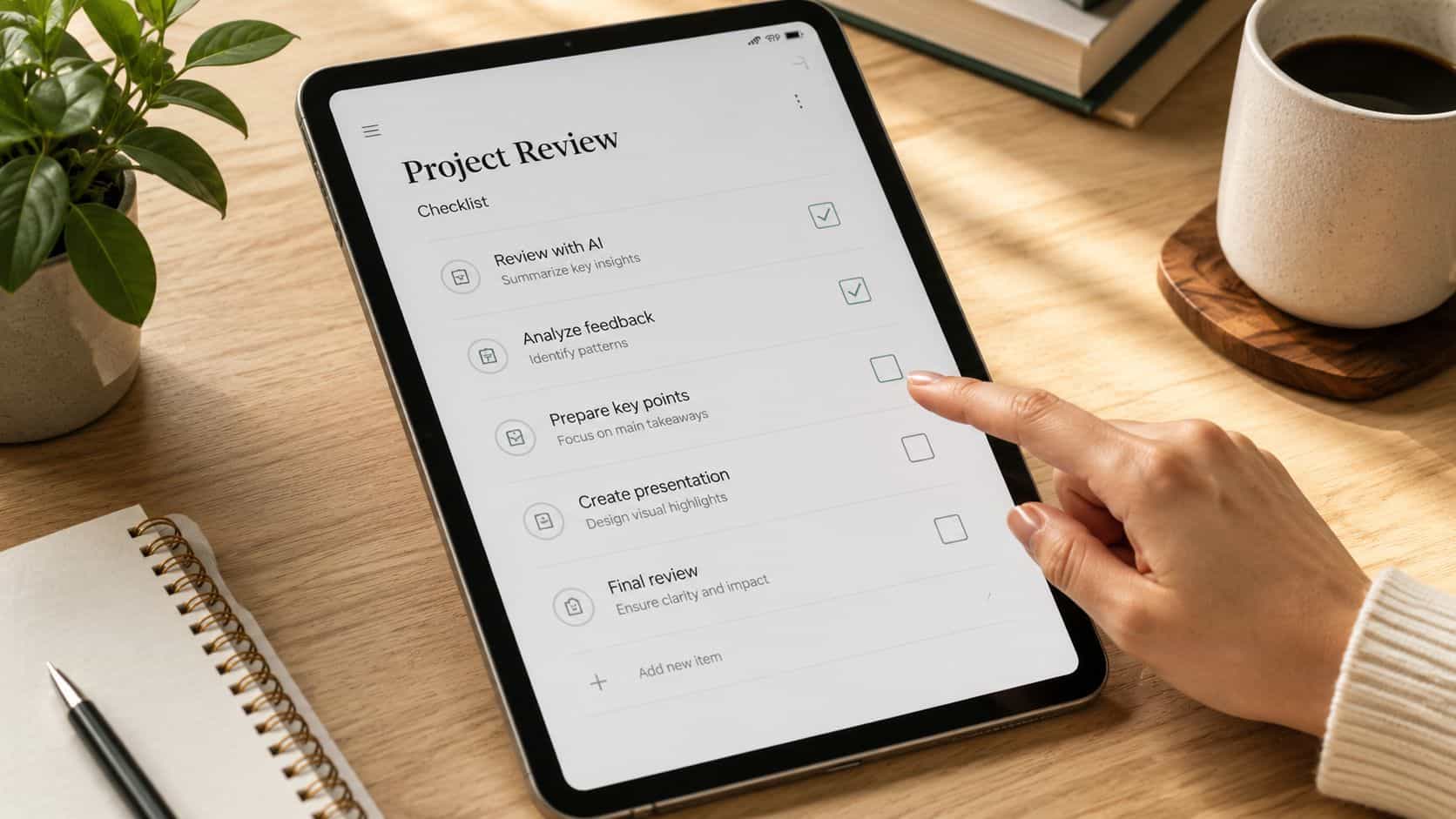
These are the moments where the prep actually pays off. Not the routine updates, but the conversations where getting the framing wrong has a real cost.
Proposing an Unbudgeted Initiative
The weak version sounds like enthusiasm looking for funding. The strong version sounds like a decision with options. Tie the initiative to an existing priority, name what gets displaced, and surface the objections before your boss does.
Rewrite this so it leads with the business case, names the tradeoffs, and makes the ask easy to evaluate. Then list the top three objections a VP would raise.Answering those objections in advance is what separates a proposal that gets approved from one that gets tabled for later.
Pushing Back on a Deadline
This is where managers fail upward most often. They either accept a date that damages the team or reject it in language that sounds emotional and inflexible. The better move preserves the intent and challenges the constraint.
Rewrite this for a leader who wants a faster delivery date. Acknowledge the goal, explain the execution risk, and present three options: cut scope, move the date, or add support. Keep it concise.The shift from “we can’t” to “here are the choices” changes the whole conversation. The same framing discipline applies to difficult conversations with your own team, where leading with options instead of problems tends to land better. Leadership might still pick the painful option, but now the decision is explicit and shared rather than dumped back on you.
Asking for Headcount or Resources
Resource requests die when they sound like relief requests instead of business decisions. Link the ask to priority protection and risk, not to how tired the team is.
Turn this into a short leadership memo. Lead with the outcome at risk, then the current constraint, the support requested, and what happens with and without it. Remove emotional language.Flagging a Risk Early
Bad risk updates are either dramatic or vague. You want your boss aware without forcing an unnecessary escalation. A strong risk note lowers anxiety because it shows ownership. A weak one raises anxiety because it signals drift.
Rewrite this risk update to be concise and calm. Structure it as: the issue, current impact, what's already been done, what decision or support is needed, and what happens next.Advocating for a Direct Report
This is one of the most important forms of managing up, and the most commonly botched. The mistake is arguing from loyalty. The fix is arguing from evidence: the scope the person already operates at, the gaps they’ve closed, the business value of recognizing it.
Help draft a promotion case organized around scope, judgment, influence, and business contribution. Make it evidence-based, not sentimental. Then list the questions a skeptical senior leader would ask.Many promotion cases fail because they read like a tribute. Senior leaders need a level assessment, not a thank-you note. The same prep approach works for the skip-level conversations where senior leaders form their own impressions of your team, which our guide to ChatGPT prompts for skip-level meetings covers in more depth.
Where AI Fails and Your Judgment Wins
AI can help you prepare for upward communication. It can’t do the relationship work, and the gap between those two things is where managers get into trouble if they over-rely on the tool.

The model can’t read timing. A well-crafted message sent the morning after your boss got grilled by the board still fails, and AI has no way to know that’s the situation. It can’t read hierarchy tension, so the exact wording that works in a private one-on-one can land as a challenge when there are three other people in the room. It can’t detect accumulated trust, so it’ll help you write confident pushback whether or not you’ve earned the standing to deliver it. And it can’t own the consequences. The model doesn’t have to live with the relationship after the message lands. You do.
This matters most in the messy relationships, which is most of them. Most managing-up advice quietly assumes your boss is available, consistent, and capable of giving clear direction. Plenty of bosses are none of those things. Culture Amp’s framing of managing up as balancing buffer, translator, and advocate is useful precisely because it treats the relationship as something you actively work rather than a clean reporting line. AI can help you prepare for each of those roles. It can’t perform any of them.
There’s also a quieter failure mode worth naming. When every difficult interaction gets routed through AI, your upward communication starts sounding polished but synthetic, and your boss begins to sense distance instead of clarity. This is one of the more common ways managers misuse AI in leadership work, letting the tool flatten the judgment that’s supposed to be the whole point. The fix is simple: use AI for the messages that genuinely matter, the hard ask, the pushback, the risk note, the promotion case, and write the routine stuff yourself.
The Real Work Is Still Yours
In the end, managing up has very little to do with your boss as a person. The whole point is making sure the work your team does gets the decisions, resources, and air cover it needs from the people above you. The relationship is the infrastructure that makes that possible, and treating it as a core part of the job rather than an annoying tax on your time is most of the battle.
AI makes the preparation faster and sharper. It helps you lead with the point, strip the emotion out of a frustrated draft, rehearse the hard conversation before you walk into it, and spot the objections before your boss raises them. Used well, it turns upward communication from something you dread into something you can actually get good at.
What it can’t do is the part that was always going to be yours. Reading the room. Choosing the moment. Knowing when to push and when to wait. Spending your credibility on the things that matter and protecting it the rest of the time. The tool prepares you for the conversation. Whether the conversation goes well still comes down to your judgment, your timing, and the trust you’ve built over months of getting the small things right.
That’s not a limitation worth complaining about. It’s the part of the job that makes you a manager instead of a message-forwarding service. Get the preparation right with AI, and you free up your attention for the judgment that only you can bring.
Frequently Asked Questions
What does “managing up” actually mean?
Managing up means consciously working with your boss to get the best results for you, your team, and the organization. It isn’t flattery or political maneuvering, and it isn’t about reversing the hierarchy. It’s closing the information gap between the work your team does and the leaders making decisions about that work. In practice that looks like flagging risk early, framing decisions so your boss can act on them quickly, and translating your team’s reality into language leadership responds to. Done well, it mostly looks like quiet competence that gives your boss fewer surprises and better choices.
Can AI write my messages to my boss for me?
It can, but you shouldn’t use it that way. AI works best as a sparring partner that improves a draft you’ve already written, not as a ghostwriter generating messages from a blank prompt. If you feed it your actual draft with the real specifics and ask it to tighten the structure, strip the emotion, or pressure-test the logic, you get something genuinely better. If you ask it to write the whole thing cold, you get polished filler that your boss will sense is synthetic. The substance has to come from you. AI shapes how it lands.
How do I push back on my boss without damaging the relationship?
Lead with the goal, not the objection. Instead of “we can’t hit that deadline,” reframe it as “we can hit the goal, and here are the three ways to do it: cut scope, move the date, or add support.” That shifts the conversation from refusal to shared decision-making. The pushback also lands better when you’ve built credibility first through consistent, low-drama follow-through, because your boss is far more likely to trust the judgment of a manager who has been reliable on the smaller things. AI can help you rehearse the framing, but the timing and delivery are yours.
Which AI tool is best for managing up?
The tool matters less than how you use it. ChatGPT, Claude, and Microsoft Copilot all handle the core tasks well: restructuring a message to lead with the recommendation, translating team frustration into leadership language, and role-playing a skeptical boss so you can hear your weak arguments before a real person does. If your work already lives in Microsoft 365, Microsoft Copilot has the integration advantage. If you want the strongest handling of long, nuanced context, Claude is a good choice. For most managing-up work, any of the three will do the job.